
Picasso Museum accessibility — services & facilities
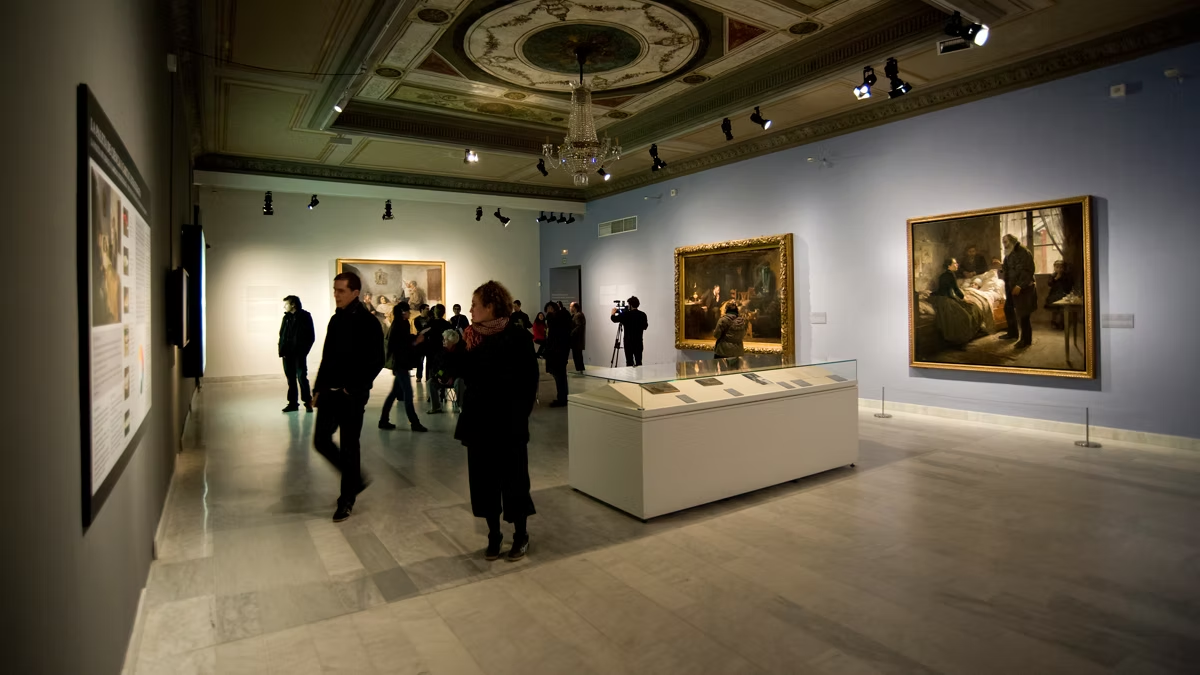
Despite occupying five medieval palaces, the Picasso Museum is largely step-free, with lifts connecting the floors and wheelchairs available to borrow. Adapted toilets are provided, and disabled visitors plus one carer enter free with advance booking. The main limitation is the narrow, uneven cobbled approach along Carrer de Montcada itself.
Five joined Gothic palaces built centuries before accessibility standards existed might not sound promising, but the Picasso Museum has adapted the buildings well. It’s not a flawless modern space, and it’s worth knowing where the genuine limitations are before you arrive.
This guide covers step-free access, equipment you can borrow, toilets, discounted and free entry, and the one part of the visit — the street outside — that needs a little extra planning.
Step-Free Access Inside the Museum
Although the collection is housed in five adjoining medieval palaces, the museum has been adapted so that lifts connect the floors, meaning the permanent collection is largely accessible without needing to use stairs. Staff at the entrance can direct wheelchair users and anyone with reduced mobility to the appropriate route through the galleries.
The internal connections between the five palaces — Palau Aguilar, Palau del Baró de Castellet, Palau Meca, Casa Mauri and Palau Finestres — mean you don’t need to leave the building and re-enter at street level between sections. It’s worth mentioning to staff at the entrance if you or someone in your group needs step-free routing, as they can point you towards lifts rather than the original stone staircases. Folding chairs are also available in the galleries on request, useful if you need to rest partway through.
Wheelchairs and Equipment to Borrow
The museum keeps wheelchairs available for visitors who need one, so you don’t necessarily need to bring your own if mobility is only an issue for a longer visit. Ask at the entrance desk when you arrive, ideally allowing a little extra time in case demand is high. Guide dogs are welcome throughout the exhibition spaces, as they should be at any UK or European cultural institution.
Toilets and Facilities
Adapted toilets are provided in the museum, so this shouldn’t be a barrier to a comfortable visit. If you have specific requirements beyond the standard adapted facilities, it’s worth calling ahead — the museum’s visitor services team can confirm exactly what’s available and where within the five-palace layout.
Free Entry for Disabled Visitors and a Carer
Disabled visitors and one accompanying carer can enter the Picasso Museum free of charge. As with the museum’s other free-entry categories, advance online booking is required, since timed slots are limited and popular times fill up.
This is a genuinely useful concession and worth planning around rather than turning up on spec, since the free slots — like the first-Sunday-of-the-month and other free windows — need to be reserved ahead through the museum’s official booking system. If you’re weighing this against other discounts, our guide to free entry days and discounts covers who else qualifies and how the booking process works.
The Approach: Carrer de Montcada
The museum’s own street, Carrer de Montcada, is a narrow medieval lane with original, uneven cobblestones — the main accessibility challenge of a visit here, rather than anything inside the museum. It’s manageable for most wheelchair and pushchair users with some care, but it’s not a smooth modern pavement.
This is the honest caveat to the otherwise good picture inside the museum. The cobbles slow progress and require a bit more concentration than a flat city pavement, particularly after rain. Arriving via Jaume I metro and approaching from the smoother stretch of Via Laietana tends to involve less rough surface than some of the tinier side lanes — see our getting there guide for the clearest route in.
Check Specifics Before You Go
Because accessibility needs vary so much from person to person, and because facilities in a centuries-old building can have quirks that don’t come across in a general guide, it’s worth contacting the museum directly ahead of a visit with reduced mobility, sensory needs or a specific piece of equipment. The official museum website publishes current accessibility information and contact details, and staff are generally responsive to advance queries about specific requirements.
Frequently Asked Questions
Is the Picasso Museum wheelchair accessible?
Yes, largely. Despite being housed in five medieval palaces, the museum has lifts connecting the floors, so wheelchair users can reach the permanent collection without needing the original stone staircases. The main challenge is outside, on the narrow cobbled Carrer de Montcada.
Can I borrow a wheelchair at the museum?
Yes, the museum keeps wheelchairs available for visitors who need one. Ask at the entrance desk when you arrive, and allow a little extra time in case demand is high, particularly during busier periods.
Do disabled visitors get free entry?
Yes, disabled visitors and one accompanying carer can enter free. As with the museum’s other free-entry slots, you’ll need to book in advance online, since places are limited and fill up, especially around popular dates.
Are there accessible toilets?
Yes, adapted toilets are provided within the museum. If you have specific facility requirements beyond the standard adapted toilet, it’s worth calling ahead to confirm exactly what’s available.
Is the street outside the museum accessible?
This is the part to plan for. Carrer de Montcada is a narrow, uneven, cobbled medieval lane, which can be slow going with a wheelchair or pushchair. It’s manageable with care, and approaching via Jaume I metro tends to involve smoother pavement than some smaller side streets.
Are guide dogs allowed inside?
Yes, guide dogs are welcome throughout the museum’s exhibition spaces, as with most cultural institutions in Barcelona and across Europe.
Can I get help with stairs or navigating between the palace buildings?
Yes. The five adjoining palaces are internally connected with lifts, and staff at the entrance can direct wheelchair users or anyone with reduced mobility along the appropriate step-free route through the collection.
Who should I contact for specific accessibility questions?
The museum’s official website lists current accessibility details and contact information, and it’s worth reaching out directly ahead of your visit if you have particular equipment, sensory or mobility needs. Staff can advise on what’s practical given the building’s medieval layout.
