
The Las Meninas series at the Picasso Museum
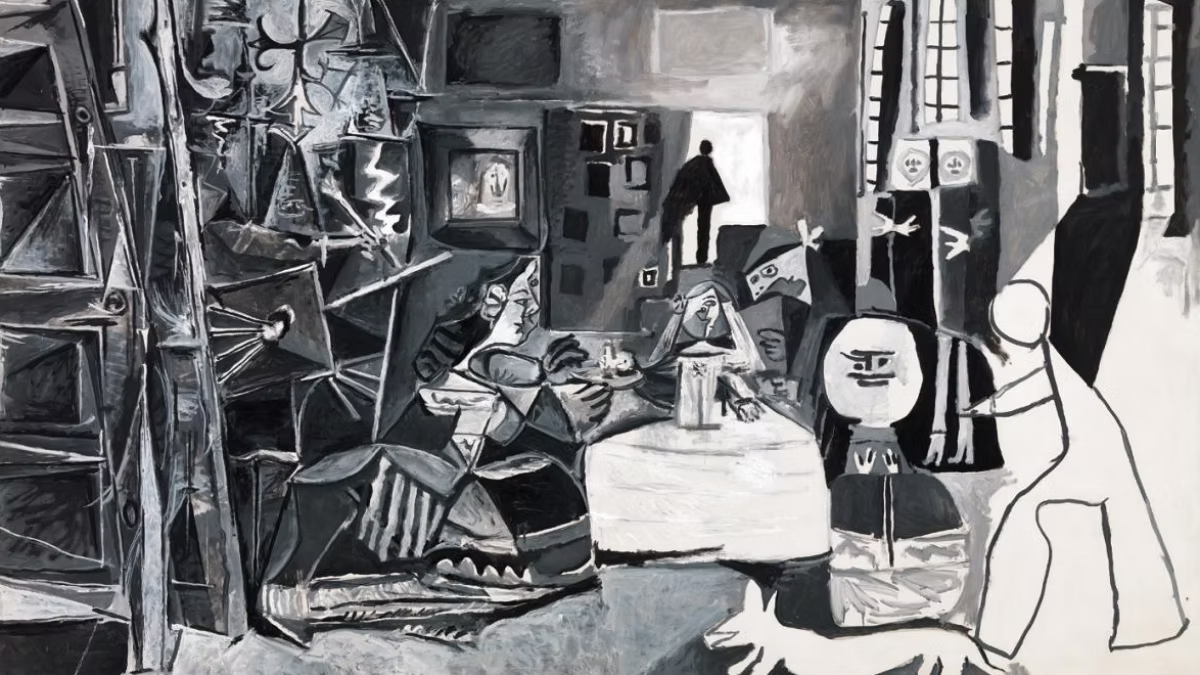
Picasso’s Las Meninas series is a complete set of 58 canvases he painted in 1957, reinterpreting Diego Velázquez’s 1656 masterpiece of the same name. He worked through the composition repeatedly, breaking down individual figures and the overall scene rather than copying it, before donating the entire series to the Picasso Museum in 1968. It is displayed together in dedicated rooms and is the collection’s single largest attraction.
Most artists who pay tribute to an old master produce one painting. Picasso produced 58, over four intensive months, taking apart a 300-year-old Spanish masterpiece piece by piece until he had said everything he wanted to about it. The result is the closest thing the Picasso Museum has to a headline attraction, and unlike almost everything else in the building, it dates from late in his career.
This guide explains why he undertook the series, how it dismantles Velázquez’s original, why it ended up in Barcelona, and what to look for when you’re standing in front of it.
Las Meninas Series at a Glance
| Detail | Overview |
|---|---|
| Number of canvases | 58 |
| Painted | 1957, over roughly four months |
| Original | Diego Velázquez’s Las Meninas (1656) |
| Donated | By Picasso, to the museum, in 1968 |
| Display | Together, in dedicated rooms |
| Where in the museum | After the early works and Blue Period galleries |
What Is Picasso’s Las Meninas Series?
It is a set of 58 paintings Picasso made in 1957 in response to Velázquez’s Las Meninas, one of the most celebrated paintings in Spanish art. Rather than a single homage, the series includes around 45 full or partial reworkings of the original composition, plus related studies of doves, the view from his studio, and a portrait of his wife, Jacqueline. All 58 stayed together as one body of work.
Picasso had admired Las Meninas since he was a student copying old masters in Madrid, and returning to it late in his career let him settle a decades-long fascination on his own terms. Working at his villa in Cannes between August and December 1957, he treated Velázquez’s court scene less as a subject to imitate than as a structure to take apart. The dove and landscape paintings within the series are quieter interludes, but the bulk of the work is a sustained, almost obsessive study of a single seventeenth-century canvas.
Why Did Picasso Paint the Las Meninas Series?
Picasso said he wanted to interpret Velázquez’s Las Meninas “my way, forgetting about Velázquez” — using it as raw material for his own ideas rather than producing a straightforward homage. Reworking one of Spanish painting’s most revered images let him engage with his own artistic heritage, and doing it dozens of times over let him treat the composition as something to be dismantled and rebuilt rather than copied once.
That distinction matters when you’re looking at the canvases. This isn’t reverence in the way a conventional copy would be — it’s an argument, conducted in paint, with a painting Picasso clearly considered unfinished business. Several canvases move a single figure or change the light source, testing what happens to the whole composition when one element shifts, which is a working method you rarely get to see laid out this openly.
How the Series Analyses and Dismantles the Original
Across the 58 canvases, Picasso isolates individual figures from Velázquez’s original — the Infanta Margarita, her maids of honour, the artist himself at his easel — and reworks each one separately before returning to fuller versions of the whole scene. Some paintings simplify the composition into near-abstraction, others restore more detail, and the light and colour shift from canvas to canvas as he tests different readings of the same moment.
Seen in sequence, the effect is closer to watching someone think out loud than viewing finished, separate artworks. A single figure might appear stark and geometric in one canvas and comparatively naturalistic in the next, and the artist’s easel and the mirror at the back of Velázquez’s original scene recur as the parts of the composition Picasso returns to most often. It rewards the kind of slow, room-by-room looking that the museum’s early works and Blue Period galleries also ask for, just applied to a single subject rather than a whole career.
Why Is the Series in Barcelona?
Picasso donated the complete Las Meninas series to the Museu Picasso in 1968, dedicating the gift to Jaume Sabartés, his friend and secretary who had died the previous year and whose own collection had helped found the museum five years earlier. It’s a rare case of an artist keeping a major late body of work entirely intact and handing it to one institution, rather than letting it scatter across galleries and private collections. That single decision is a large part of why this museum, otherwise focused on Picasso’s early years, has one substantial later masterpiece at all — a point covered in our overview of the permanent collection.
The series is displayed together in its own dedicated rooms, arranged so you can follow the progression from Picasso’s early studies through to the more resolved late canvases. It hasn’t left the museum on a permanent basis since, though individual works occasionally travel for major loan exhibitions elsewhere.
Highlights to Look For
Look for the earliest canvases in the sequence, which stay closest to Velázquez’s original tonal palette, and compare them with the later, more fractured reworkings of the same figures — the shift in Picasso’s confidence with the material is visible across just a few rooms. The Infanta Margarita, the small central figure Velázquez placed at the heart of the original, reappears more often than any other element and is worth tracking across multiple canvases. The dove paintings and studio-view landscapes within the series offer a deliberate change of pace, and the closing portrait of Jacqueline brings the sequence back to Picasso’s own life.
Frequently Asked Questions
How many paintings are in Picasso’s Las Meninas series?
58 canvases in total: around 45 that directly rework Velázquez’s original composition, plus 9 studies of doves, 3 landscape views from his studio, and a portrait of his wife, Jacqueline. Picasso painted the whole set in 1957 and it has remained together ever since. It’s the largest single body of work by Picasso held anywhere.
When did Picasso paint the Las Meninas series?
Over roughly four months in 1957, working at his home in Cannes, in the south of France. He began in mid-August and finished by the end of December that year. It came fairly late in his career, decades after most of the rest of the museum’s collection.
Why did Picasso choose Velázquez’s Las Meninas to reinterpret?
He had admired the painting since studying it as a young copyist in Madrid, and it’s widely considered one of the most significant works in Spanish art history. Returning to it in 1957 let him engage directly with that artistic inheritance on his own terms, reworking rather than simply copying it. He described wanting to do it “my way, forgetting about Velázquez.”
Is the whole series on display, or just a few paintings?
The complete set of 58 canvases is displayed together in dedicated rooms at the Picasso Museum, which is unusual for a series this size. Picasso donated the whole group in 1968, and it has stayed intact and largely in Barcelona ever since. Occasional loans for major exhibitions elsewhere are the exception rather than the rule.
Do I need to know Velázquez’s original painting before I visit?
It helps, but it isn’t essential — the wall text and most guided tours explain the original composition as you go. Recognising figures such as the Infanta Margarita and the artist’s own self-portrait at the easel makes the reworkings easier to follow. If you want that context in advance, our guide to the permanent collection has a short overview.
How long should I spend with the Las Meninas series?
Most visitors spend twenty to thirty minutes in the dedicated rooms, longer if you enjoy tracking how individual figures change from canvas to canvas. It’s worth budgeting extra time here specifically, since it’s the collection’s densest single display. See our guide to how long to spend at the Picasso Museum for a fuller room-by-room plan.
Is the Las Meninas series the only later work in the museum?
Almost. Aside from the ceramics collection made in his final decades, the museum has very little from Picasso’s Cubist period or his other famous later work, such as Guernica, which is held in Madrid. The Las Meninas series is the clear exception, which is part of why it draws so much attention within an otherwise early-career collection.
Where does the Las Meninas series sit within the museum’s layout?
It comes after the early works and Blue Period galleries, in its own dedicated rooms within the medieval palace complex. The sequencing is deliberate, taking you from Picasso’s youth through to this later, more conceptual body of work. Our guide to the museum’s medieval palaces explains how the wider route through the buildings is organised.
