
How to get to the Picasso Museum — transport & directions
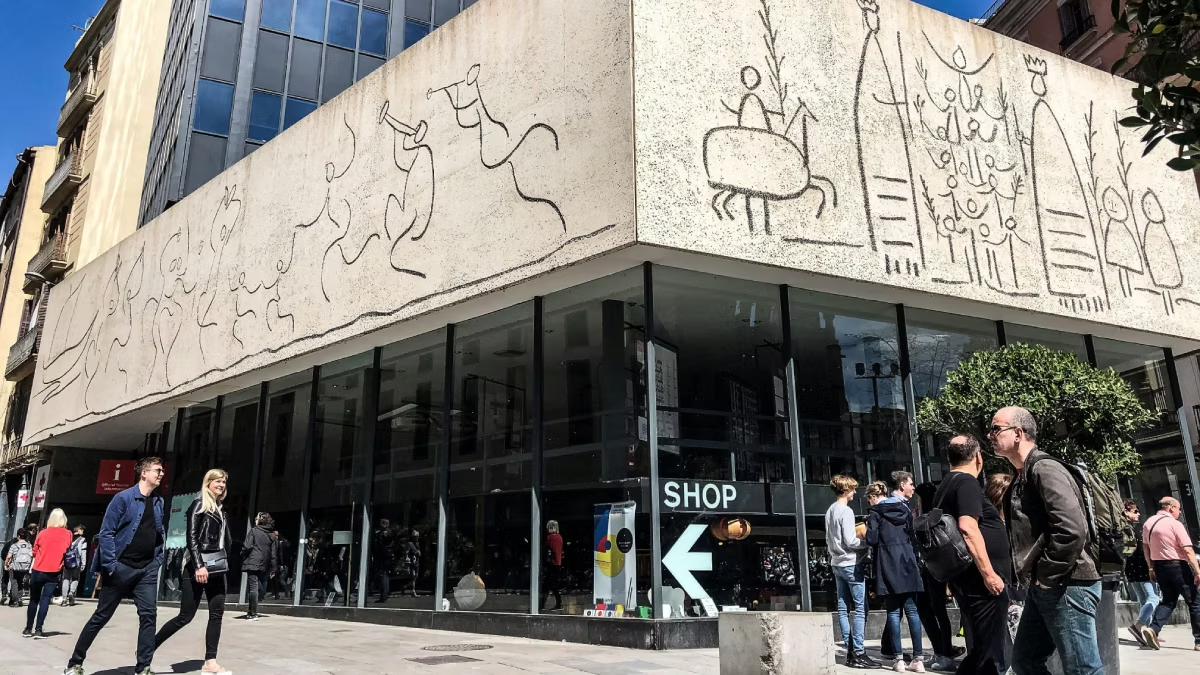
The Picasso Museum is at Carrer de Montcada 15-23 in the El Born district. The nearest metro is Jaume I on L4 (the yellow line), about a 3-minute walk, with Arc de Triomf on L1 around 7 minutes away. Several buses stop nearby on Via Laietana and Passeig Picasso, and it’s a 10–15 minute walk from the Barri Gòtic or Las Ramblas.
El Born is one of the oldest parts of Barcelona, and the museum’s address on a narrow medieval lane means there’s no way to pull straight up to the door. Getting there is easy by metro or on foot, but knowing which entrance street to aim for saves you circling the block once you arrive.
This guide covers every practical way to reach the Picasso Museum, from the metro and bus to walking routes, taxis and a quick word on transfers from the airport or Sants station.
By Metro
The closest metro station is Jaume I on the yellow L4 line, roughly a 3-minute walk through the Barri Gòtic side streets to Carrer de Montcada. Arc de Triomf on the purple L1 line is a little further, around 7 minutes on foot, but it’s a pleasant route past the Passeig Picasso and the Parc de la Ciutadella side.
Jaume I is the station almost everyone uses. Coming out onto Via Laietana, head into the small streets on the sea side of the road and Carrer de Montcada appears after a couple of turns — it’s well signposted once you’re in El Born. Arc de Triomf works well if you’re coming from the Sants direction or connecting from L1, and it has the advantage of putting you at the northern end of Carrer de Montcada, which is useful if you’re also planning to stop at things to do near the Picasso Museum on the same walk.
By Bus
Several city bus routes stop within a few minutes of the museum. Services along Via Laietana pass close to the Jaume I end of Carrer de Montcada, while others stop at Passeig Picasso and Pla de Palau, both a short walk from the opposite end of the street near Santa Maria del Mar. Bus stops are well signed with route maps, and if you’re already exploring by hop-on hop-off bus, El Born is typically included as a stop — see our guide to the hop-on hop-off bus tour for how that fits with a museum visit. Buses are a reasonable option if your hotel doesn’t have easy metro access, though the metro is quicker for most central Barcelona locations.
Walking from the Barri Gòtic or Las Ramblas
It’s about a 10–15 minute walk from Las Ramblas or the heart of the Barri Gòtic to the Picasso Museum, crossing Via Laietana into the smaller lanes of El Born. The route is flat, entirely on foot-friendly streets, and passes some of the city’s oldest architecture on the way.
If you’re staying near Las Ramblas or exploring the Gothic Quarter, walking is often more enjoyable than the metro for such a short distance. Head east from the cathedral area, cross the wide Via Laietana, and you’re into the medieval grid of El Born within a few minutes. The streets narrow noticeably as you approach — a sign you’re close, and part of the district’s charm covered in our El Born neighbourhood guide. Give yourself a little extra time if you plan to browse shopfronts along the way, as this stretch is dense with small boutiques and bakeries.
Carrer de Montcada Itself
The museum’s own street deserves a mention because it catches people out. Carrer de Montcada is a narrow, cobbled medieval lane lined with the Gothic palaces that house the collection, and it can feel more like an alley than a street when you first arrive — there’s no grand plaza or obvious façade, just a row of stone doorways. The museum’s entrance is marked, but look for the queue or ticket-check point rather than expecting a large visible sign from a distance. The unevenness of the cobbles is worth knowing about if you’re travelling with a pushchair, wheeled luggage or reduced mobility; our accessibility guide has more detail on managing this approach.
Taxis and Drop-Off
Taxis can get close to the museum but not directly outside it, since Carrer de Montcada itself is largely pedestrianised and too narrow for regular traffic. The most practical drop-off points are on Via Laietana or Passeig Picasso, from where it’s a short walk in on foot. This is generally quicker than trying to route a car through the surrounding lanes, and most Barcelona taxi drivers know the area well enough to suggest the best nearby point.
From the Airport or Sants Station
Coming from Barcelona–El Prat Airport, the Aerobus and the R2 Nord train both run into the city centre, from where you can pick up the metro to Jaume I or Arc de Triomf; allow around 45 minutes to an hour door-to-door depending on your route and connections. From Barcelona Sants station, the metro connects through Plaça Catalunya onto L4 or L1 in one change, typically 15–20 minutes in total. Given how central El Born is, a taxi from either the airport or Sants is also a straightforward, if pricier, option — confirm current fares and journey times before you travel, as they vary with traffic and time of day.
Frequently Asked Questions
What is the nearest metro station to the Picasso Museum?
Jaume I, on the yellow L4 line, is the closest, about a 3-minute walk from Carrer de Montcada. Arc de Triomf on L1 is the next nearest option, roughly 7 minutes away on foot, and is useful if you’re arriving from a part of the city better served by that line.
Can I walk to the Picasso Museum from Las Ramblas?
Yes. It’s a flat, straightforward walk of about 10–15 minutes from Las Ramblas, crossing Via Laietana into the older streets of El Born. Many visitors combine the walk with a browse through the Barri Gòtic, so allow extra time if you want to stop along the way.
Which buses stop near the Picasso Museum?
Routes along Via Laietana serve the Jaume I end of the museum’s street, while others stop at Passeig Picasso and Pla de Palau near the opposite end. Bus stops carry route maps, and the museum’s official site lists the exact numbers, which are worth checking as routes are occasionally revised.
Is there parking at the Picasso Museum?
The museum has no car park of its own, and Carrer de Montcada is largely pedestrianised, so driving directly there isn’t practical. The nearest public car parks are a short walk away, including options near Passeig del Born and Via Laietana. Public transport or a taxi drop-off nearby is usually more convenient than driving.
How do I get to the Picasso Museum from the airport?
The Aerobus or the R2 Nord train both run into central Barcelona, where you connect to the metro (L4 or L1) for the final stretch to Jaume I or Arc de Triomf. Door-to-door this is typically around 45 minutes to an hour depending on connections. A taxi is faster but costs considerably more.
How do I get to the Picasso Museum from Barcelona Sants station?
From Sants, take the metro via Plaça Catalunya to connect onto L4 or L1, which is usually one change and around 15–20 minutes in total. A taxi is a direct alternative if you’re carrying luggage or arriving with tight timing.
Is Carrer de Montcada easy to find?
It’s tucked into El Born’s medieval grid rather than fronting a main road, so it can take a moment to locate on a first visit. Once you’re within a couple of streets of it, though, signage and the visible museum queue make it obvious. Following directions from Jaume I metro is the most reliable approach.
Is the walk to the museum accessible for wheelchairs or pushchairs?
Most of the route from Jaume I or Las Ramblas is on ordinary pavements, but Carrer de Montcada itself is cobbled and uneven, which can be slow going with wheels. It’s manageable with care, and the museum itself is largely step-free once inside — see our accessibility guide for the full picture.
