
Picasso Museum with kids — is it family friendly?
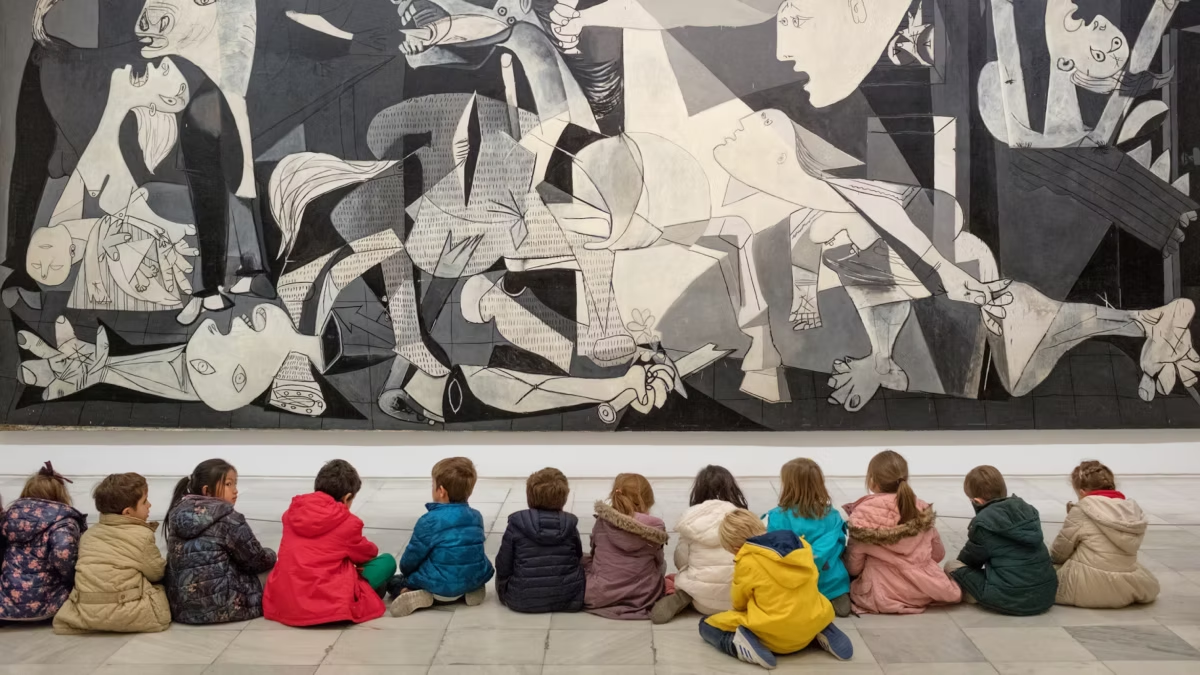
Yes, the Picasso Museum works well with children, especially with under-18s admitted free. It suits a focused 60–90 minute visit rather than a long wander, with the ceramics room, the colourful Las Meninas series and Picasso’s own childhood works among the pieces that tend to hold children’s attention best. Strollers are allowed, and there’s a cloakroom for bags and buggies.
The Picasso Museum isn’t built as a children’s museum, but it has real advantages for families visiting Barcelona. Under-18s always enter free, the collection includes plenty of accessible, colourful and even playful pieces, and its medieval-palace setting is a curiosity in itself for younger visitors. The trick is keeping the visit short and picking your moments rather than trying to see everything.
This guide covers what makes the museum family friendly, what children tend to enjoy most, how long to plan for, and where to take a break nearby if young legs or patience run out.
Is the Picasso Museum Good for Kids?
It can be, if you plan around a child’s attention span. The museum is medium-sized, housed in five Gothic palaces that are interesting in their own right, and under-18s enter free. It isn’t designed specifically for children, so a short, guided-by-you visit that picks out a handful of rooms works far better than trying to see all 4,251 works in the collection.
The free entry for under-18s is the single most useful family fact about the museum, and it applies at any time, not just on discounted days. Combined with a reduced ticket for accompanying young adults aged 18–25, a family visit can be considerably cheaper than the general admission price suggests. The museum periodically runs family-oriented activities and workshop materials, particularly during Spanish school holidays, so it’s worth checking the official website for what’s currently on before you go.
What Children Tend to Enjoy Most
Younger visitors generally respond best to the parts of the collection with a clear story or strong colour and shape, rather than the more academic early studies. Picasso’s own childhood and teenage works are a natural hook, since children can relate to the idea that Picasso was once a young art student himself, sketching the world around him in Barcelona. The permanent collection is arranged roughly chronologically, so this material comes early in the visit, which suits shorter attention spans.
The complete Las Meninas series is usually the highlight for families. Picasso’s 58 canvases reworking Velázquez’s famous painting are bold, varied and often playful in their distortions of the same scene, and children tend to enjoy spotting how the characters change from picture to picture without needing to know the art-historical background. The ceramics room is another reliable favourite — plates and vessels painted with faces, animals and simple bold designs are more immediately engaging for children than framed paintings, and far more tactile in feel even though everything is behind glass.
Keeping a Family Visit Short and Manageable
Sixty to ninety minutes is a realistic length for a family visit with children, picking out the early works, the Las Meninas series and the ceramics room rather than covering the whole museum. Pushing much beyond that risks tired, restless children in galleries that get busy and don’t have much space to let off energy.
The museum’s own guidance and general visitor pacing point to roughly an hour to 90 minutes for the collection at an adult pace; for a family with younger children, aim toward the shorter end and be ready to leave earlier if attention flags. Our guide to how long to spend at the Picasso Museum breaks down pacing for different types of visitor, including families. A short mid-visit break — a bench in a courtyard, a snack, a few minutes outside — often resets a flagging child better than pushing through to the end.
Practical Details: Strollers, Cloakroom and Access
Strollers can be brought into the museum, though the galleries are arranged across several adjoining medieval palaces with occasional steps between sections, so allow for a slightly slower pace than a modern, single-level museum. A cloakroom near the entrance is available for bags, coats and buggies you’d rather not push through busier rooms, which is worth using if your child would rather walk or be carried for the ceramics room in particular. For visitors with additional access needs, our accessibility guide covers lifts, step-free routes and borrowing a wheelchair.
Taking a Break Nearby in El Born
If a child needs to run off energy before or after the museum, El Born has good options within a few minutes’ walk. Passeig del Born, the wide pedestrian promenade right at the end of Carrer de Montcada, is an easy, traffic-free spot to stretch legs and find a bench. A little further on, Parc de la Ciutadella has open lawns, a boating lake and a playground, and makes a natural post-museum stop for younger children who need proper space to run. The Chocolate Museum (Museu de la Xocolata), a short walk away on Carrer del Comerç, is a popular family pairing with a Picasso Museum visit, since it’s hands-on, sweet-toothed and considerably shorter to get through. Our guide to things to do near the Picasso Museum has more nearby options for breaking up the day.
Frequently Asked Questions
Is the Picasso Museum suitable for young children?
It works better for children around seven and up who can engage with a museum setting for a short while, though younger children can still enjoy the ceramics room and the colourful Las Meninas paintings for a shorter stretch. Very young children and babies are welcome, with strollers permitted, but expect to keep the visit brief.
Do children need a ticket?
No. Under-18s are admitted free at all times, not just on discounted days, and don’t need to book a paid ticket. It’s still worth reserving a free slot in advance online alongside the accompanying adult’s ticket, since capacity is limited on the museum’s narrow site.
What parts of the museum do kids like best?
The Las Meninas series and the ceramics room are usually the biggest hits, thanks to their colour, variety and more playful character. Picasso’s own early works, made when he was a similar age to many young visitors, are another good starting point, and come early in the permanent collection.
How long should we plan for with children?
Sixty to ninety minutes is realistic for most families, focusing on a handful of rooms rather than the whole museum. See our guide to how long to spend at the Picasso Museum for a fuller breakdown by visitor type.
Are strollers allowed inside?
Yes, strollers are permitted, though the museum spans several adjoining medieval palaces with some level changes, so allow extra time to navigate between rooms. A cloakroom near the entrance can hold a buggy or bags if you’d rather carry a child through busier galleries.
Is there anywhere to leave bags or buggies?
Yes, there’s a cloakroom near the entrance for bags, coats and pushchairs, which is useful for the narrower or busier rooms where manoeuvring a stroller is harder.
Does the museum run family activities?
The museum periodically offers family workshops and activity materials, particularly around Spanish school holiday periods, though this varies through the year. Check the official website ahead of your visit to see what’s scheduled.
Where can we take a break with kids nearby?
Passeig del Born, right outside the museum, is a good spot for a few minutes outside, and Parc de la Ciutadella a short walk further has a playground, lawns and a boating lake. The Chocolate Museum nearby is also a popular, shorter add-on for families. See things to do near the Picasso Museum for more.
