
Picasso Museum permanent collection — an overview
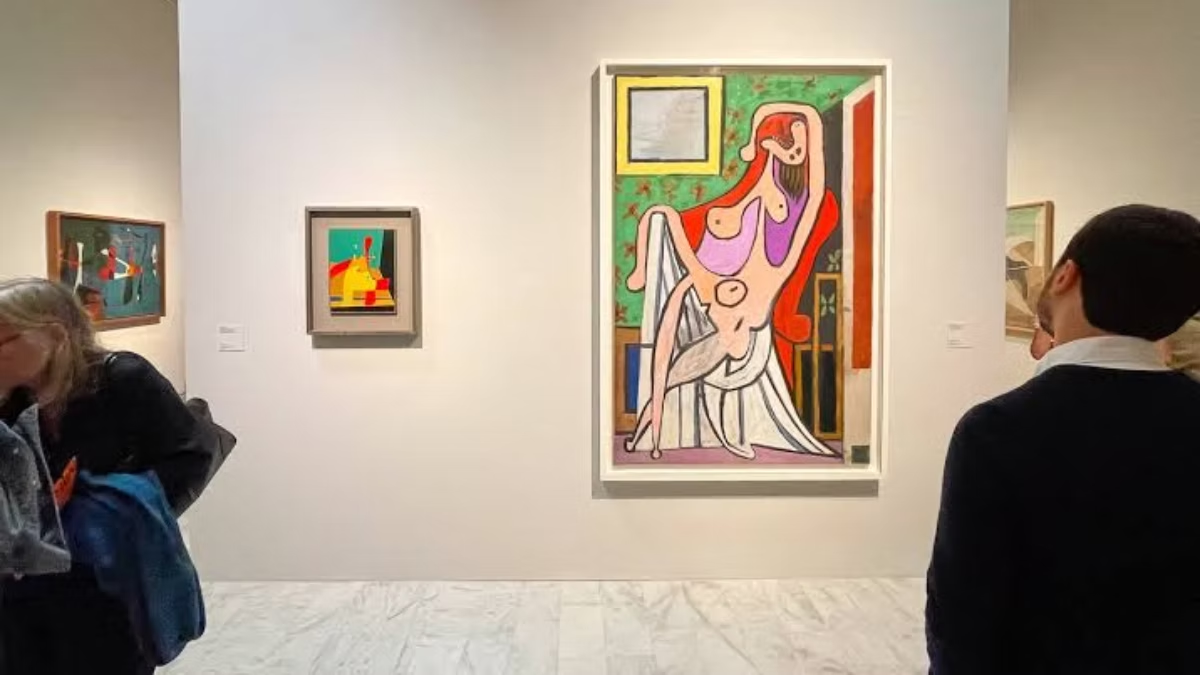
The Picasso Museum’s permanent collection holds around 4,251 works, making it the world’s most complete record of Picasso’s formative years — from his academic training as a teenager through the Blue Period. It’s arranged across five adjoining medieval palaces on Carrer de Montcada, with highlights including the complete Las Meninas series and a room of ceramics. There is very little from his famous Cubist or later Guernica-era work.
Most visitors arrive expecting a survey of Picasso’s whole career and leave surprised by how narrow — and how rewarding — the focus actually is. The Museu Picasso is built almost entirely around the artist’s early life: the academic prodigy, the moody young painter of the Blue Period, and the ceramicist of his final decades, bridged by one extraordinary later series.
That focus is the museum’s identity rather than a limitation, provided you know what you’re walking into. This guide covers how the collection is arranged across the medieval palaces, its main highlights, and what it honestly does and doesn’t include.
Picasso Museum Collection at a Glance
| Detail | Collection |
|---|---|
| Total works | Around 4,251 |
| Main focus | Picasso’s formative years (Barcelona training, Blue Period) |
| Housed in | Five adjoining Gothic palaces on Carrer de Montcada |
| Standout series | Las Meninas, 58 canvases, 1957 |
| Ceramics | A dedicated room, many pieces donated by Jacqueline Roque |
| Later masterpieces (Cubism, Guernica) | Not represented — held elsewhere |
How Many Works Are in the Picasso Museum Collection?
The collection totals around 4,251 works across paintings, drawings, prints, sketchbooks and ceramics, though only a portion is on display at any one time. It is the single largest public holding of Picasso’s work anywhere, and specifically the most complete record of his early development as an artist, rather than a cross-section of his entire seventy-year career.
That scale is partly a matter of donation history. Picasso’s friend and secretary Jaume Sabartés gave his own personal collection to help found the museum in 1963, and Picasso himself added to it steadily over the following years, including the entire Las Meninas series in 1968. The result is a museum built from an artist’s own generosity to people who knew him young, which is why it leans so heavily towards his early Barcelona years.
How the Collection Is Arranged Across the Medieval Palaces
The museum occupies five adjoining Gothic buildings — Palau Aguilar, Palau del Baró de Castellet, Palau Meca, Casa Mauri and Palau Finestres — knocked together into one continuous route through stone courtyards and vaulted rooms. Walking between galleries means crossing between medieval palaces rather than through a single purpose-built structure, which shapes the visit as much as the art does. Our guide to the medieval palaces themselves covers the architecture in more depth.
The layout is broadly chronological, so the route itself tells Picasso’s early story. You move from his childhood drawings and academic studies, through Barcelona youth scenes, into the blues and greys of his most famous early period, before a later wing gives the Las Meninas series and the ceramics room to themselves. It rewards walking through in order rather than skipping ahead.
The Early Works and the Blue Period
The earliest rooms show a technically gifted teenager — paintings such as Science and Charity (1897) and First Communion (1896) reveal formal academic training rather than the mature Picasso most visitors expect. From there, the collection moves into the Blue Period (roughly 1901–1904), when a melancholy blue-grey palette and subjects like beggars and outcasts took over his work.
Few museums let you watch an artist’s technique arrive fully formed and then deliberately abandoned in the space of a few rooms. Here, the academic precision of the teenage Picasso gives way within a handful of galleries to the flatter, sadder Blue Period canvases, painted after he had moved between Barcelona and Paris and lost a close friend. It is the single clearest argument for visiting the museum in order rather than cherry-picking rooms. Our dedicated guide to Picasso’s early works and the Blue Period goes through the specific paintings and the story behind the shift.
The Las Meninas Series
In 1957, Picasso spent four months in Cannes producing 58 canvases that dissect and reinterpret Velázquez’s 1656 masterpiece Las Meninas. He donated the complete series to the museum in 1968, and it is the one substantial body of later work the collection holds — displayed together in its own dedicated rooms.
Nothing else in the museum shows Picasso’s mature working method as directly as this series does. Rather than a single tribute painting, he circled the same composition dozens of times, isolating figures, changing the light, and stripping the scene down and building it back up. Because the whole set stayed together and came to Barcelona as one gift, it is one of the only places in the world to see Picasso think in series rather than in single finished works. The full story is in our guide to the Las Meninas series.
The Ceramics Room
Away from the paintings, a quieter room holds Picasso’s ceramics — plates, jugs and figures made mostly in the south of France in his final decades, many donated to the museum by his widow, Jacqueline Roque. They are a different Picasso: playful, domestic, working in clay rather than paint, and easy to miss if you rush the later galleries. It’s a good place to slow down after the intensity of the Blue Period rooms and the Las Meninas series.
Does the Picasso Museum Have Guernica or Cubist Paintings?
No. The Museu Picasso in Barcelona has almost nothing from Picasso’s Cubist period or his famous later masterpieces such as Guernica, which hangs at the Museo Reina Sofía in Madrid. Its collection is built around his formative years instead — a deliberate strength rather than a gap, since no other museum covers this period as completely.
This is worth knowing before you go, because it’s the most common source of disappointment among first-time visitors expecting a greatest-hits survey. Think of the Barcelona museum as the origin story rather than the highlight reel of a seventy-year career — the technique, the influences and the turning points that made the later work possible, told through the years when they actually happened.
Is the Permanent Collection Worth Visiting?
For anyone interested in how an artist develops rather than just the famous finished statements, yes — few collections anywhere let you trace a single figure’s early years this closely. If you’re hoping specifically for Cubism or Guernica, temper your expectations and treat this as a different, earlier chapter instead. Our fuller answer, weighing the cost and the crowds, is in is the Picasso Museum worth it.
Frequently Asked Questions
How many works does the Picasso Museum have?
The collection totals around 4,251 pieces, including paintings, drawings, prints and ceramics, though not all are displayed at once. It’s the largest public Picasso holding in the world and specifically the most complete for his early years. Rotations mean the exact rooms you see can vary slightly between visits.
What period of Picasso’s life does the museum focus on?
Overwhelmingly his formative years — childhood drawings, academic training in Barcelona, and the Blue Period of the early 1900s. The main later exception is the complete Las Meninas series from 1957. If you want his Cubist or Surrealist work, you’ll need a different museum, such as the Reina Sofía in Madrid or the Musée Picasso in Paris.
Where is the Las Meninas series and is it always on display?
Yes, the full 58-canvas series is permanently displayed together in dedicated rooms, since Picasso donated the whole set to the museum in 1968. It’s the collection’s single largest attraction and worth planning extra time for. See our guide to the Las Meninas series for what to look out for.
Does the collection include Guernica?
No. Guernica is held at the Museo Reina Sofía in Madrid, not in Barcelona. The Museu Picasso instead concentrates on the years before Picasso’s Cubist and later work, which is a different — and less commonly seen — side of his career.
What are the must-see highlights in the permanent collection?
The early academic paintings such as Science and Charity, the Blue Period rooms, the complete Las Meninas series, and the ceramics room are the four things worth prioritising if your time is limited. Together they cover roughly seventy years of work, from a fifteen-year-old’s formal training to pieces made in his final decade.
Is the permanent collection arranged in chronological order?
Broadly, yes. The route moves from Picasso’s childhood and academic years through the Blue Period before reaching the later Las Meninas and ceramics rooms, so walking it in sequence gives the clearest sense of his development. It’s one of the few museums where following the intended route genuinely changes how the collection reads.
How long does it take to see the whole permanent collection?
Most visitors need an hour to ninety minutes to see it properly at a steady pace, longer if the temporary exhibition is also open. The medieval palace layout means a fair amount of walking between rooms, so build in a little extra time. Our guide to how long to spend at the Picasso Museum breaks this down room by room.
Is the permanent collection included in the general admission ticket?
Yes. General admission covers the whole permanent collection plus whatever temporary exhibition is running, with no separate charge for either. Reduced and free-entry rates also apply to both. Full current pricing is in our ticket prices guide.
