
El Born neighbourhood guide — visiting the Picasso Museum area
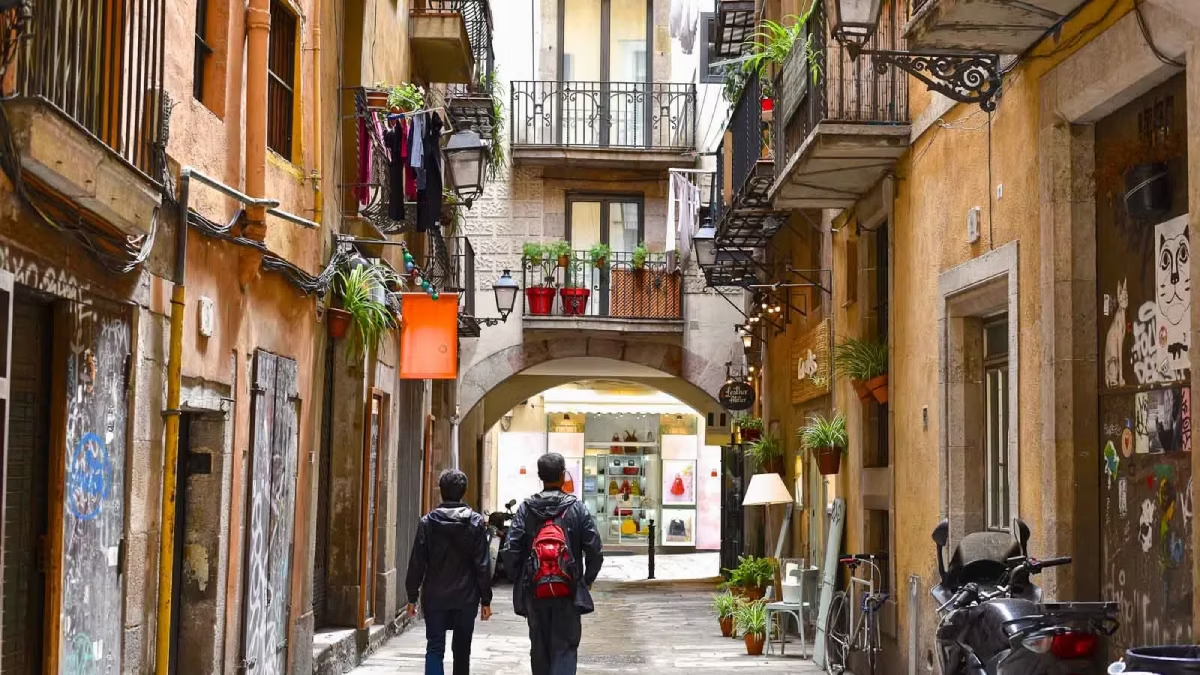
El Born (also called La Ribera) is Barcelona’s medieval merchant and textile quarter, a tight grid of narrow lanes east of Via Laietana. The Picasso Museum occupies five Gothic mansions on its main street, Carrer de Montcada, alongside the basilica of Santa Maria del Mar, the Passeig del Born and the excavated market at El Born Centre de Cultura i Memòria — all within a five-minute walk of each other.
El Born rewards visitors who treat the museum as one stop on a longer wander rather than an isolated errand. The district it sits in is one of Barcelona’s oldest, and its history of merchants, guilds and seafaring wealth explains why five medieval palaces ended up lining a single street in the first place.
This guide covers the character and history of El Born, the sights worth combining with your museum visit, and how to string them together into an unhurried afternoon.
El Born Highlights at a Glance
| Place | What it is | Distance from the museum |
|---|---|---|
| Santa Maria del Mar | Catalan Gothic basilica | 4–5 minutes on foot |
| Passeig del Born | Wide tree-lined former jousting square | 3–4 minutes on foot |
| El Born Centre de Cultura i Memòria | Former market over excavated 1700s ruins | 3–4 minutes on foot |
| Moco Museum | Modern and contemporary art | Same street, Carrer de Montcada |
A Medieval Merchant and Textile Quarter
El Born, also known as La Ribera, grew up from the 13th century as Barcelona’s merchant and textile district, close to the old shoreline and the city’s medieval port. Wealthy traders and guilds built grand town houses here, and the area’s name and narrow layout still reflect that commercial, working past rather than any later planned development.
The district’s streets are named after the trades once carried out on them — Carrer de l’Argenteria for silversmiths, Carrer dels Mirallers for mirror-makers — a pattern typical of a city organised around its guilds. Unlike the wide 19th-century avenues of the Eixample, El Born’s lanes are narrow and irregular because they were never redesigned; you’re walking the same layout medieval traders used. That density is part of the appeal, but it also means pushchairs and wheeled luggage move slowly over the cobbles.
The Mansions of Carrer de Montcada
Carrer de Montcada was El Born’s most prestigious address, lined with the courtyard mansions of the merchant families who grew rich on Mediterranean trade. Five adjoining Gothic palaces — Palau Aguilar, Palau del Baró de Castellet, Palau Meca, Casa Mauri and Palau Finestres — now house the Picasso Museum’s permanent collection, and the buildings themselves are as much a reason to visit as the art inside. Their stone courtyards and external staircases are described in more detail in our guide to the medieval palaces that make up the museum.
The Moco Museum, a separate modern and contemporary art collection, occupies another historic building further along the same street, so a single walk down Carrer de Montcada takes in two very different museums without changing address.
Santa Maria del Mar
Santa Maria del Mar is El Born’s other unmissable landmark, a short walk from the museum towards Passeig del Born. Built between 1329 and 1383 in a remarkably pure Catalan Gothic style, the basilica is famous for having been raised largely by the bastaixos — the dockworkers and porters of the port — who carried the stone from Montjuïc on their backs as an act of devotion. The result is a soaring, unusually uncluttered interior that architecture enthusiasts rate among the finest Gothic buildings in Europe, and it’s free to step inside.
Passeig del Born and El Born Centre de Cultura i Memòria
Passeig del Born is the wide, tree-lined square running between Santa Maria del Mar and the old Born Market building, once used for jousting tournaments and now lined with bars and restaurants. At its far end sits El Born Centre de Cultura i Memòria, a 19th-century iron-and-glass market hall that closed in the 1970s. Renovation works in the 2000s uncovered the remains of an entire early-18th-century neighbourhood beneath the market floor, demolished after the 1714 siege of Barcelona to make way for the Ciutadella fortress. You can view the excavated ruins and ironwork from walkways above, with a modest charge to access the archaeological site itself.
Boutiques and Tapas Bars
El Born’s narrow lanes are dense with independent boutiques, design studios and small food shops, a contrast to the chain stores nearer Las Ramblas. It’s also one of Barcelona’s best areas for tapas, with bars tucked into former merchant houses serving everything from classic pintxos to modern Catalan small plates. Our guide to restaurants near the Picasso Museum rounds up specific options within a few minutes’ walk, useful for timing a meal either side of your museum slot.
How the Museum Fits into a Wander of El Born
Most visitors combine the Picasso Museum with a wider El Born walk rather than visiting it in isolation, since Santa Maria del Mar, Passeig del Born and the neighbourhood’s shops and bars all sit within five minutes on foot. A logical order is Carrer de Montcada first, then south towards Santa Maria del Mar and Passeig del Born, finishing with food or coffee in the surrounding lanes.
Because the museum itself takes only an hour to 90 minutes, pairing it with the neighbourhood turns a single stop into a half-day out. For a fuller list of what else is within walking distance, see our guide to things to do near the Picasso Museum, and for step-by-step directions in from the metro or the Barri Gòtic, see getting to the Picasso Museum.
Frequently Asked Questions
What is El Born known for?
El Born (La Ribera) is known as Barcelona’s medieval merchant and textile quarter, home to the Gothic mansions of Carrer de Montcada, the basilica of Santa Maria del Mar, and a dense grid of boutiques and tapas bars. It’s also where the Picasso Museum and the Moco Museum are both based, making it one of the city’s most museum-rich neighbourhoods for its size.
Is El Born the same as La Ribera?
Largely, yes — El Born and La Ribera refer to the same historic district, with El Born often used for the livelier area around Passeig del Born and the old market, and La Ribera as the broader traditional name for the whole quarter. Locals and visitors tend to use the names interchangeably.
How far is Santa Maria del Mar from the Picasso Museum?
It’s about a 4–5 minute walk south from Carrer de Montcada, mostly through narrow medieval lanes. The route is flat and easy, and many visitors combine the two in the same outing since both sit within El Born’s compact centre.
What is El Born Centre de Cultura i Memòria?
It’s a former 19th-century market hall at the end of Passeig del Born, where renovation works uncovered the ruins of an early-1700s neighbourhood demolished after the 1714 siege of Barcelona. You can view the excavated remains from walkways within the building, with a modest fee to access the archaeological site itself.
Can I walk between the Picasso Museum and the Moco Museum?
Yes — they’re on the same street, Carrer de Montcada, just a short walk apart. It’s easy to see both in one visit if modern and contemporary art alongside Picasso’s early work appeals; our guide to the Picasso Museum and Moco Museum combined ticket covers how that works.
Is El Born safe to walk around, including at night?
El Born is generally considered one of Barcelona’s safer, more visitor-friendly neighbourhoods, busy with restaurants and bars well into the evening. As anywhere popular with tourists, keep an eye on bags and pockets in crowded lanes, but there’s nothing unusual to flag beyond ordinary city-centre caution.
What’s the best way to get to El Born?
Jaume I metro station on the L4 line is the closest stop to Carrer de Montcada, about a three-minute walk. Full transport options, including buses and walking routes from the Barri Gòtic, are in our guide to getting to the Picasso Museum.
Are there good restaurants near the Picasso Museum?
Yes, El Born is one of Barcelona’s stronger areas for tapas and small-plate dining, with options ranging from simple pintxos bars to more considered Catalan cooking, many within a few minutes of Carrer de Montcada. See our roundup of restaurants near the Picasso Museum for specific recommendations by style and budget.
