
Is the Picasso Museum worth it? An honest answer
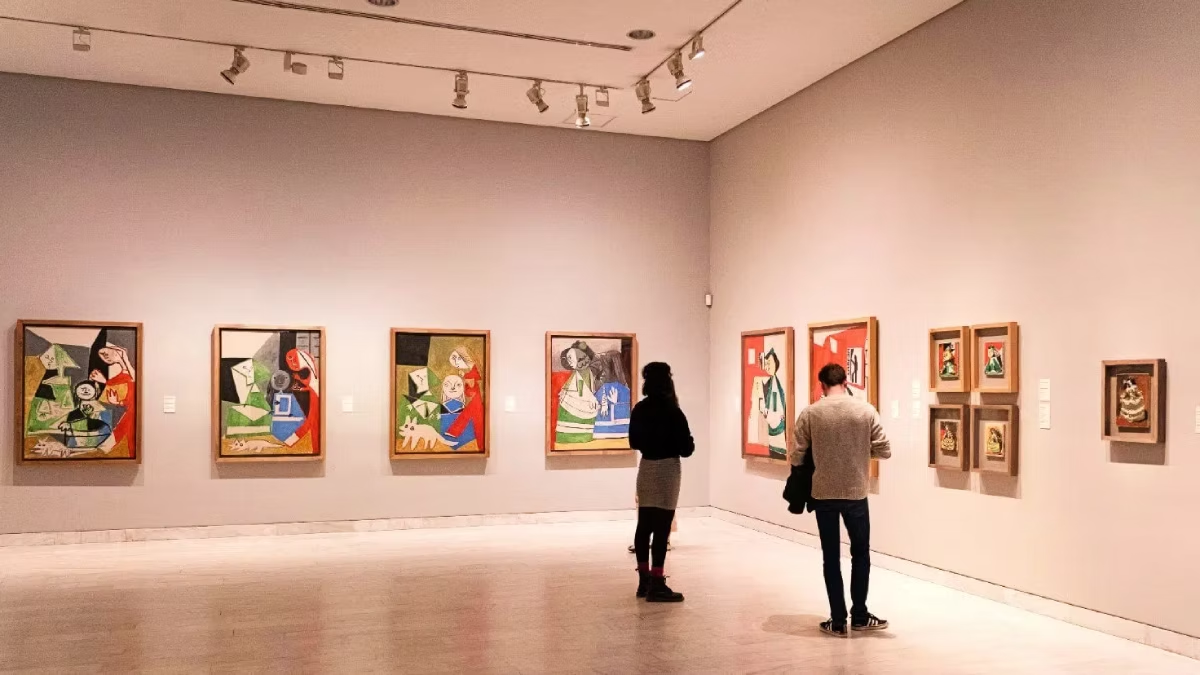
Yes, for most visitors — the Picasso Museum holds the world’s best collection of his formative years and the full Las Meninas series, set inside five genuinely beautiful medieval palaces. The honest caveat is that it doesn’t hold his famous later Cubist or Guernica-era masterpieces, and timed entry means some planning. It suits anyone curious about Picasso’s development more than those expecting his best-known works.
The Picasso Museum is one of Barcelona’s most-visited attractions, and also one of the most misunderstood. Plenty of visitors arrive expecting a greatest-hits survey of Picasso’s whole career and leave slightly confused not to find it. That’s not a flaw in the museum — it’s a mismatch of expectations worth clearing up before you book.
This guide gives a straight answer: what the museum genuinely does well, what it honestly doesn’t offer, and who is likely to love it versus who might leave disappointed.
What the Museum Does Well
The Picasso Museum’s genuine strength is depth over breadth: it holds the world’s most complete collection of Picasso’s academic training and Blue Period, the full 58-canvas Las Meninas series, and a fine ceramics room, all inside five adjoining Gothic palaces on Carrer de Montcada. It rewards visitors who want to understand how Picasso became Picasso, not just see a famous painting.
No other museum can show you the arc from a technically gifted teenager copying academic studies to the melancholy, mature Blue Period paintings in one continuous run of rooms. That developmental story, told through the permanent collection, is genuinely rare and hard to see anywhere else. The Las Meninas series — 58 canvases painted in 1957 reinterpreting Velázquez — is the collection’s single best set piece and worth the visit on its own.
The setting adds to it. Five adjoining medieval palaces, connected by stone stairways and courtyards, are handsome buildings in their own right, and the museum is compact enough to see properly without the exhausting scale of a place like the Prado. You’re rarely more than a short walk from the exit if you’ve had enough, which isn’t true of larger institutions.
The Honest Caveats
The Picasso Museum does not hold Guernica or his famous Cubist masterpieces from the 1910s onwards — those hang in Madrid and elsewhere. Entry is timed, galleries can feel narrow and busy at peak hours, and the museum is closed every Monday. None of these are dealbreakers, but they’re worth knowing before you set expectations for the visit.
This is the point most first-time visitors miss: the Picasso Museum is about the artist’s formative years, not a survey of his whole career. If you’re hoping to see Guernica, you’d need Madrid’s Museo Reina Sofía instead. The rooms themselves, while atmospheric, are also narrower than a purpose-built modern gallery, and they fill up during the midday rush in high season, which can make the busiest galleries feel cramped.
Timed entry is sensible in principle, but it means you can’t simply turn up and walk in — you need a slot booked for a specific date, ideally in advance during peak months. None of this makes the museum not worth visiting; it just means going in with the right expectations changes how much you enjoy it.
Who Will Love It
Anyone genuinely curious about how an artist develops will find this museum unusually rewarding — it’s less a highlights reel and more a case study in artistic growth, laid out room by room in chronological order. Art students, first-time visitors to Picasso’s work, and anyone who enjoys a compact, walkable museum over a sprawling one will likely rate it highly. The setting inside the medieval palaces is also a genuine draw for anyone interested in Barcelona’s older architecture alongside the art.
Who Might Be Disappointed
Visitors expecting Picasso’s most famous individual paintings — the Cubist portraits, Guernica, the works most people picture when they hear his name — won’t find them here, and no amount of good curation changes that gap. If you have very limited time in Barcelona and want to compare against the city’s other big-name museums, our comparison of the Picasso Museum against the Moco Museum can help you decide which suits your priorities better on the same street.
The Verdict
Is it worth it? For the large majority of visitors, yes — the depth of the early-years collection, the Las Meninas series, and the medieval palaces together justify the ticket price and the modest planning that timed entry requires. It’s a museum best approached with realistic expectations about what it holds rather than what it’s famous for. Pair it with a sensible plan for how long to spend at the Picasso Museum and you’ll get the most out of the visit without over- or under-booking your day.
Frequently Asked Questions
Is the Picasso Museum worth the entry price?
Yes, for most visitors. At €14 online, it’s reasonably priced for a museum holding the world’s most complete collection of Picasso’s early years and the full Las Meninas series, inside five historic palaces. It’s a fair price for what’s on show, though it helps to know in advance what the collection does and doesn’t cover.
Does the Picasso Museum have any of Picasso’s famous paintings?
It has genuinely significant works, including the complete Las Meninas series, but not his most widely recognised individual paintings like Guernica, which is in Madrid. What it has instead is unmatched depth on his formative years and Blue Period — a different, quieter kind of significance than a single blockbuster canvas.
Is the Picasso Museum overrated?
Not exactly overrated, but often misunderstood. Visitors who arrive expecting a Cubist and Guernica-era retrospective can leave underwhelmed, while those who understand it as a museum of Picasso’s development tend to rate it highly. Setting the right expectations beforehand makes a bigger difference here than at most museums.
How does the Picasso Museum compare to the Reina Sofía in Madrid?
They’re complementary rather than competing. The Reina Sofía holds Guernica and Picasso’s mature Cubist work; the Picasso Museum in Barcelona holds his academic training, Blue Period and the Las Meninas series. Seeing both, if your trip allows it, gives a far more complete picture of his career than either alone.
Is one to two hours enough to appreciate the Picasso Museum?
Yes, comfortably. Most visitors see the permanent collection well in an hour to 90 minutes, with more time if the temporary exhibition interests you. It’s a compact museum rather than a marathon, and our how long to visit guide sets out a realistic pace room by room.
Is the Picasso Museum better than the Moco Museum on the same street?
They’re different experiences rather than directly comparable — the Picasso Museum is historical and developmental, while the Moco Museum is modern, contemporary and more Instagram-friendly. Many visitors do both since they’re a few doors apart. Our full Picasso Museum vs Moco Museum comparison breaks down which suits your interests.
Is the Picasso Museum worth it if I’ve already seen Picasso’s work elsewhere?
Yes, if you haven’t seen his formative years specifically — this is the one museum built entirely around that period, including work you won’t find in general modern-art collections. If you’ve already visited the Reina Sofía or a major Cubist retrospective, this museum fills in the earlier chapters of the story rather than repeating what you’ve seen.
Is the Picasso Museum worth it for a short Barcelona trip?
Yes, largely because it’s compact. At an hour to 90 minutes for the collection, it fits easily into a single morning or afternoon alongside other El Born sights, unlike larger museums that can swallow half a day. For a trip with only one or two free slots for museums, it’s an efficient, high-quality choice.
