
Picasso Museum FAQs — your questions answered
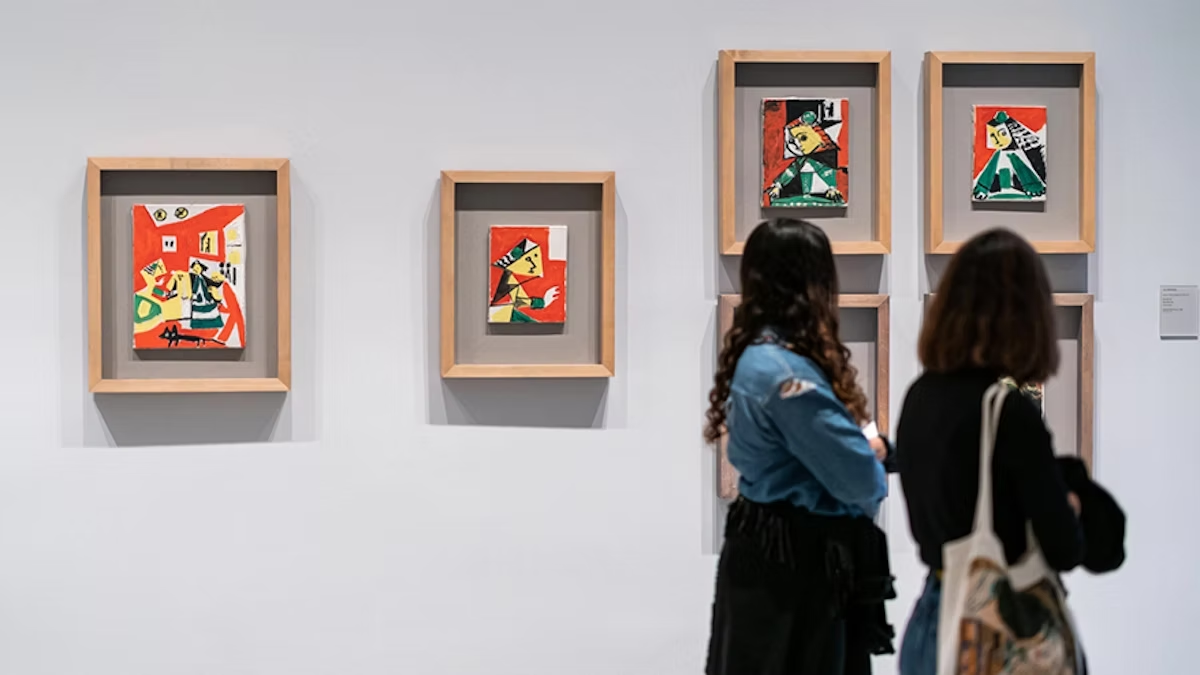
The Picasso Museum costs €14 online (€15 at the door), with a €7.50 reduced rate and free entry under 18. It’s closed Mondays, opens 10:00am–7:00pm in winter and from 9:00am in summer, and sits on Carrer de Montcada, a short walk from Jaume I metro. The collection focuses on Picasso’s early years and Blue Period, plus the Las Meninas series — not his later Cubist or Guernica-era work.
This page collects the questions visitors ask most often about the Picasso Museum, grouped by topic so you can jump to what you need. Every answer below reflects the museum’s current published prices, hours and layout, with links through to a fuller guide wherever one exists.
If you can’t find your question here, the topic-specific guides linked throughout go into more depth — start with tickets and hours if you’re still planning, or the collection questions if you’re deciding whether the museum is right for you.
How much are tickets to the Picasso Museum?
General admission is €14 if you book online, or €15 at the door on the day. That price covers both the permanent collection and any temporary exhibition running at the time. A reduced ticket at €7.50 is available for ages 18–25, students, over-65s and the unemployed, and under-18s enter free. See our full breakdown of ticket prices and categories for who qualifies for each rate.
Is it cheaper to buy tickets online than at the door?
Yes, by €1 — €14 online against €15 at the door — and booking online also secures your timed entry slot in advance, which matters in peak season when on-the-day availability can be limited. Our step-by-step guide to buying Picasso Museum tickets online covers the booking process from choosing a date to receiving your ticket.
Who qualifies for the reduced ticket price?
The €7.50 reduced rate applies to visitors aged 18–25, students with valid ID, over-65s, and the unemployed, among other categories. You’ll typically need to show ID or proof of status at entry. Under-18s go further and enter completely free, with no ticket purchase required at all.
When is entry to the Picasso Museum free?
Entry is free on the first Sunday of every month, on winter-season Thursday afternoons from 4:00–7:00pm, and on a handful of fixed dates through the year, including 12 February, 17 May and 24 September. All free slots need an advance online reservation and fill quickly. Our guide to free entry days and discounts has the full calendar and booking details.
Is the Picasso Museum open on Mondays?
No. The museum is closed every Monday throughout the year, which is the single most common scheduling mistake visitors make. It opens Tuesday to Sunday, with hours that vary by season. Full details, including public holiday closures, are in our guide to opening hours by season.
What are the winter opening hours?
From late September to late March, the museum opens Tuesday to Sunday, 10:00am to 7:00pm, with last admission 30 minutes before closing. These are the shorter hours of the two seasons, so a morning or early-afternoon visit gives you the most comfortable timing before the evening cut-off.
What are the summer opening hours?
From late March to late September, the museum opens an hour earlier at 9:00am. It closes at 8:00pm on Tuesday, Wednesday and Sunday, and stays open until 9:00pm on Thursday, Friday and Saturday. Those later Thursday-to-Saturday evenings tend to be one of the calmer windows of the week once daytime groups have thinned out.
What time is last admission?
Last admission and the ticket office close 30 minutes before the museum shuts, so around 6:30pm in winter and between 7:30pm and 8:30pm in summer depending on the day. Because a proper visit takes at least an hour, treat last admission as your real deadline rather than the published closing time.
Where is the Picasso Museum located?
The museum sits at Carrer de Montcada 15–23, in the El Born (La Ribera) district of Barcelona’s old town. It occupies five adjoining medieval palaces along a narrow, atmospheric street lined with galleries, boutiques and tapas bars. Our full guide to getting to the Picasso Museum covers routes from across the city.
What is the nearest metro station to the Picasso Museum?
Jaume I on Line 4 is closest, around a three-minute walk from the entrance. Arc de Triomf on Line 1 is a slightly longer alternative, useful if you’re arriving from that side of the city or combining the visit with a walk through the Born.
Can I walk to the Picasso Museum from Las Ramblas or the Gothic Quarter?
Yes, comfortably. It’s roughly a 10–15 minute walk from Las Ramblas or the Barri Gòtic through the old town’s narrow streets, which is often quicker and more pleasant than taking the metro for such a short distance. It’s a good way to see more of the medieval city en route.
How do I get to the Picasso Museum from the airport or my hotel?
From the airport, the metro (lines L9 or L2, changing towards the city centre) or a taxi of around 30–40 minutes are the most straightforward options. From most central Barcelona hotels, a short metro hop to Jaume I or a walk through the old town will get you there. Our getting there guide has route options by transport type.
How long should I spend at the Picasso Museum?
Budget an hour to 90 minutes for the permanent collection, plus another 30 minutes if the temporary exhibition interests you. With a guide, plan on about 1.5 hours. There’s no strict time limit once you’re inside, so you can linger. Our detailed guide to how long to spend at the Picasso Museum breaks this down room by room.
Is the Picasso Museum worth visiting?
For most travellers, yes — it holds the world’s most complete collection of Picasso’s formative years and the full Las Meninas series, housed in genuinely beautiful medieval palaces. The honest caveat is that it doesn’t hold his famous later Cubist or Guernica-era work, which sits elsewhere. Our full honest review of whether it’s worth it weighs the trade-offs.
Is the Picasso Museum suitable for children?
It can work well for engaged school-age children, particularly with the family activities the museum runs, though the narrow galleries and dense hang suit patient visitors better than toddlers. Timing your visit for a quieter slot helps. See our guide to visiting the Picasso Museum with kids for age-specific advice.
Is the Picasso Museum accessible for visitors with disabilities?
Largely, yes — the museum has lifts between floors despite occupying medieval buildings, and wheelchairs are available to borrow. The main practical obstacle is Carrer de Montcada itself, a narrow, unevenly cobbled street outside. Our accessibility guide covers the specifics in more detail.
What’s in the Picasso Museum’s collection?
The collection holds around 4,251 works and is the world’s most complete record of Picasso’s early academic training in Barcelona and his subsequent Blue Period. It also holds the complete 58-canvas Las Meninas series and a room of ceramics, many donated by his widow, Jacqueline Roque. Our guide to the permanent collection covers the highlights room by room.
Does the Picasso Museum have Guernica?
No. Guernica hangs at the Museo Reina Sofía in Madrid, not in Barcelona. The Picasso Museum’s strength is his formative years — his teenage academic studies and the Blue Period — rather than his mid- and late-career Cubist and political work, which are held elsewhere.
What is the Las Meninas series at the Picasso Museum?
It’s a set of 58 canvases Picasso painted in 1957, reinterpreting Velázquez’s 17th-century masterpiece of the same name. It’s the single most significant set piece in the collection and usually the room visitors remember most. Our dedicated guide to the Las Meninas series explains the story behind it.
Is there a temporary exhibition at the Picasso Museum right now?
The museum runs a changing programme of temporary exhibitions alongside the permanent collection, included in the standard admission price. What’s showing varies through the year, so check the official listings or our guide to temporary exhibitions before you go if a specific show matters to your visit.
