
Picasso’s early works & the Blue Period
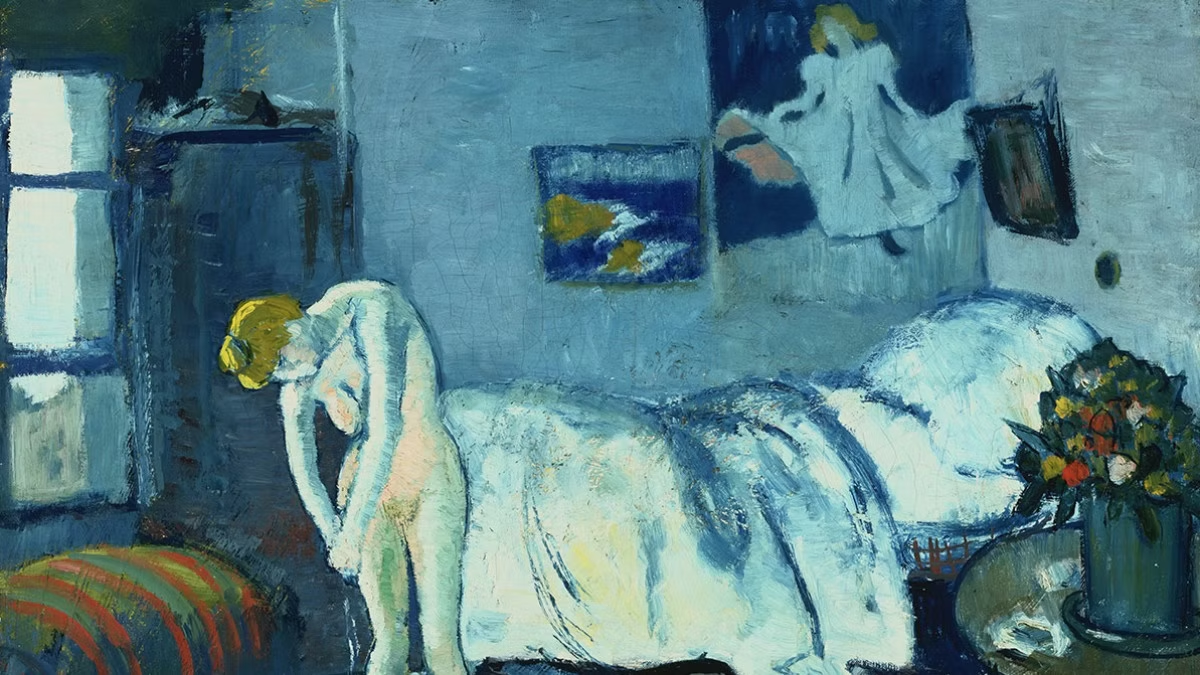
The Picasso Museum’s early rooms trace Picasso from a precociously skilled teenage academic painter into the melancholy Blue Period of roughly 1901–1904. Key works include Science and Charity (1897), First Communion (1896), and Blue Period paintings shaped by his Barcelona youth around the Els Quatre Gats café and the death of his friend Carles Casagemas. No other museum holds this early stretch of his career as completely.
The Picasso most people picture — fractured Cubist faces, Guernica’s screaming horse — is nowhere in these opening rooms. Instead you find a teenager with formal academic training so precise it could pass for a much older painter’s work, followed by a young man painting in blues and greys, worked through grief and poverty in Barcelona and Paris. It’s a different, earlier Picasso, and the museum tells that story better than anywhere else.
This guide covers his academic training, his Barcelona youth, the Blue Period itself, and the specific works held in the collection.
Early Works & Blue Period at a Glance
| Detail | Overview |
|---|---|
| Academic works | Science and Charity (1897), First Communion (1896) |
| Painted age | Mid-teens, while training in Barcelona and briefly Madrid |
| Barcelona circle | Els Quatre Gats café, first solo show in 1900 |
| Blue Period | Roughly 1901–1904, blue-grey palette, subjects on the margins |
| Trigger | Poverty in Paris and Barcelona; the death of friend Carles Casagemas |
| Where in the museum | Early galleries, ahead of the Las Meninas rooms |
Picasso’s Academic Training
Before he was twenty, Picasso had already mastered the academic painting style taught in Spain’s art schools, producing ambitious works such as Science and Charity (1897), painted at fifteen, and First Communion (1896). Both show the technical range of formal training — anatomy, composition, dark realist tone — years before he began deliberately breaking from it.
Science and Charity is the clearest evidence of this. It shows a bedridden patient attended by a doctor and a nun holding a child, painted by Picasso at just fifteen with his father posing as the physician. The picture won an honourable mention at a major exhibition in Madrid and a gold medal in Málaga, official recognition his later, more radical work would rarely court. Seeing it hung near his fractured later style makes the eventual break far more striking than reading about it ever could — it’s covered in more depth in our overview of the museum’s permanent collection.
Picasso’s Barcelona Youth and Els Quatre Gats
Picasso’s family moved to Barcelona in 1895, and the city’s bohemian scene shaped him as much as any art school did. He fell in with the crowd around Els Quatre Gats, a café on Carrer Montsió that hosted the city’s modernist artists and writers, and held his first solo exhibition there in 1900 — teenage portraits and Barcelona street scenes rather than the mature work he’d later be known for. That youthful Barcelona period sits just before the Blue Period in the museum’s galleries, and it’s worth slowing down for rather than treating as a prelude.
The narrow lanes around the museum today still echo that period, even if the café itself is a short walk away rather than inside the museum. If you want to see more of the city that shaped him, our guide to the El Born neighbourhood around the museum covers the wider district.
What Was the Blue Period?
The Blue Period, roughly 1901 to 1904, refers to the years when Picasso painted almost exclusively in blues and blue-greens, depicting beggars, the blind, the poor and other figures on society’s margins. It followed a difficult stretch moving between Barcelona and Paris and, most significantly, the suicide of his close friend Carles Casagemas in 1901, which darkened his subject matter and palette alike.
The shift is abrupt enough to see across a handful of rooms — warm academic tones give way almost overnight to cold blues, and cheerful Barcelona scenes to figures who look hungry, blind or grieving. It’s generally read as Picasso working through loss and poverty rather than following a stylistic trend, which is part of why the paintings still feel raw rather than decorative. The museum’s galleries make that emotional shift as legible as the technical one.
Key Early and Blue Period Works in the Collection
The museum’s strength here is depth rather than a handful of famous names — dozens of works chart the movement from academic study to Blue Period melancholy in close sequence. Alongside Science and Charity and First Communion, look for early Barcelona street scenes and portraits from the Els Quatre Gats years, then the blue-toned figures that follow. Because so much of this material stayed in Spain rather than travelling with Picasso to Paris, the sequence here is unusually complete; our guide to the museum’s medieval palaces explains how the rooms themselves are laid out to support that chronological reading.
Later in the visit, the tone changes again entirely once you reach the Las Meninas series — a deliberate jump forward to 1957 that the museum uses to bookend the early story rather than fill in the decades between.
Is the Early Collection Worth Seeing If You Don’t Know Picasso’s Later Work?
If anything, coming without strong preconceptions about Cubism or Guernica works in your favour here — you’re not measuring these rooms against a different Picasso, just watching one young artist’s development on its own terms. It helps to know going in that this isn’t a survey of his whole career; our honest take on that trade-off is in is the Picasso Museum worth it.
Frequently Asked Questions
What is Picasso’s Blue Period?
It’s the phase, roughly 1901–1904, when Picasso painted almost exclusively in blue and blue-grey tones, depicting the poor, the blind and other marginalised figures. It followed personal loss, particularly the death of his friend Carles Casagemas, and financial hardship in Paris and Barcelona. The Picasso Museum holds one of the most complete groupings of this period anywhere.
What is Picasso’s most famous early painting in the museum?
Science and Charity (1897), painted when he was fifteen, is usually singled out as the clearest demonstration of his academic skill. It shows a doctor and nun attending a sick patient, and won official recognition at exhibitions in Madrid and Málaga at the time. First Communion (1896) is the other frequently cited early highlight.
Why did Picasso’s style change so dramatically in the Blue Period?
Most accounts point to the combined effect of poverty during his early Paris trips and, above all, the suicide of his close friend Carles Casagemas in 1901. The subject matter shifted towards outsiders and the destitute, and the palette narrowed to cold blues and greys to match. It’s one of the clearest examples of an artist’s personal life visibly reshaping his work.
What was Els Quatre Gats and why does it matter to Picasso’s story?
Els Quatre Gats was a bohemian café in Barcelona where Picasso mixed with the city’s modernist artists and writers as a teenager, and where he held his first solo exhibition in 1900. It placed him at the centre of Barcelona’s avant-garde scene before he’d left for Paris. It isn’t part of the museum itself, but it’s a short walk away in the old city.
How old was Picasso when he painted his early academic works?
Remarkably young — Science and Charity dates from when he was fifteen, and First Communion from around fourteen. Both already show a command of composition and anatomy well beyond typical work of that age. It’s this precocity, more than any single painting, that the museum’s early rooms are built to demonstrate.
Are the early works and Blue Period paintings displayed together?
Yes, they run in close chronological sequence in the museum’s earlier galleries, which is how the shift between the two is meant to be read. Walking the rooms in order shows the change in palette and subject far more clearly than viewing either period in isolation. It’s one of the museum’s clearest arguments for not skipping ahead.
Does the Blue Period section include Picasso’s most famous painting from that era?
The museum’s Blue Period holdings are strong but concentrated on works from his Barcelona and early Paris years specifically; some Blue Period paintings now more closely associated with Picasso, made slightly later, are held in other museums, including in Paris and the United States. Hedge your expectations accordingly and treat the museum’s set as a deep, specifically Barcelona-focused selection rather than a complete Blue Period retrospective.
How much time should I set aside for the early works and Blue Period rooms?
Twenty to thirty minutes is usually enough to look properly without rushing, as part of a wider visit of an hour to ninety minutes for the whole permanent collection. If you’re especially interested in this period, allow longer and expect to double back. Our guide to how long to spend at the Picasso Museum has a fuller room-by-room breakdown.
